
Winter Car Prep for Rideshare Drivers: A 2026 Checklist for Atlanta, Houston and Dallas
NOAA's winter outlook favors wetter-than-average conditions across the South. Here's a winter car prep checklist for drivers in Atlanta, Houston and Dallas.
When you drive for Uber or DoorDash, your car is your paycheck. A dead battery on a cold morning, a slow leak on a rainy night or a wiper that smears instead of clears can cost you a shift, a few good surge hours or a rating. And this winter may give the South more wet, stormy days than usual.
On October 15, 2026, NOAA released its Winter Outlook for December 2026 through February 2027. With a very strong El Niño in place, NOAA says wetter-than-average conditions are likely across the southern U.S. Here is a simple winter car prep checklist for rideshare and delivery drivers in Atlanta, Houston and Dallas, what you can do yourself, and an easier option if you would rather not deal with it at all.
Quick answer: what should rideshare drivers check before winter?
Check five things before the first cold, rainy week: your battery, your tire pressure and tread, your wipers and washer fluid, all your lights, and your emergency kit. Then plan how you will drive (or when you will log off) when rain or ice hits.
- Battery: get it tested if it is 3 or more years old (AAA says average battery life is 3 to 5 years).
- Tires: set pressure to the number on your driver's door placard when tires are cold, and make sure tread is at least 2/32 of an inch.
- Wipers and fluid: replace worn blades and use winter washer fluid.
- Lights: check headlights, brake lights, turn signals and hazards.
- Kit: jumper cables, flashlight, phone charger, blanket, water and a first aid kit.
Why does winter car prep matter for drivers in the South?
Because winter in the South usually means rain, not snow, and NOAA expects more of it this year. NOAA's outlook favors wetter-than-average conditions across the southern tier, and its Climate Prediction Center puts the greatest wet odds in the Southeast and Florida.
"As we know from decades of observations, a very strong El Nino will likely bring a southward and eastward shift to the jet stream for the contiguous U.S., which tilts the odds toward stormier weather across the South," said Ken Graham, director of NOAA's National Weather Service, in the October 15 release. NOAA also says near-normal temperatures are most likely for parts of the Southeast. The outlook does not forecast snowfall, and NOAA will update it on November 19.
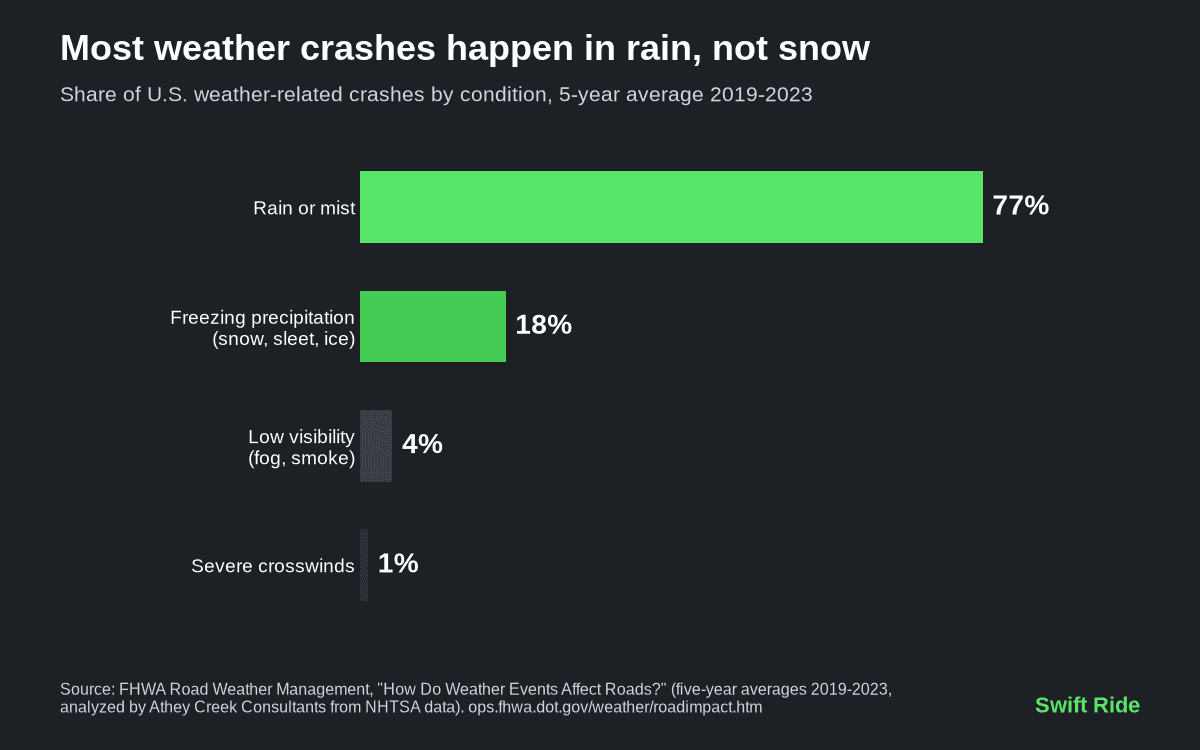
Rain is the big one for drivers. The Federal Highway Administration (FHWA) says about 12% of U.S. crashes are weather-related, and over 77% of those happen on wet pavement or in rain or mist. FHWA also says arterial speeds drop 10 to 25% on wet pavement, which means slower trips and fewer rides per hour on bad days.
Ice still happens, too. In January 2025, Houston got a storm the National Weather Service called exceptionally rare, with up to 6 inches of snow in La Porte and 3 inches at Hobby Airport, according to Houston Public Media. You don't need to prep like you live in Minnesota, but you should be ready for a few rough days.
How does cold weather affect a car battery?
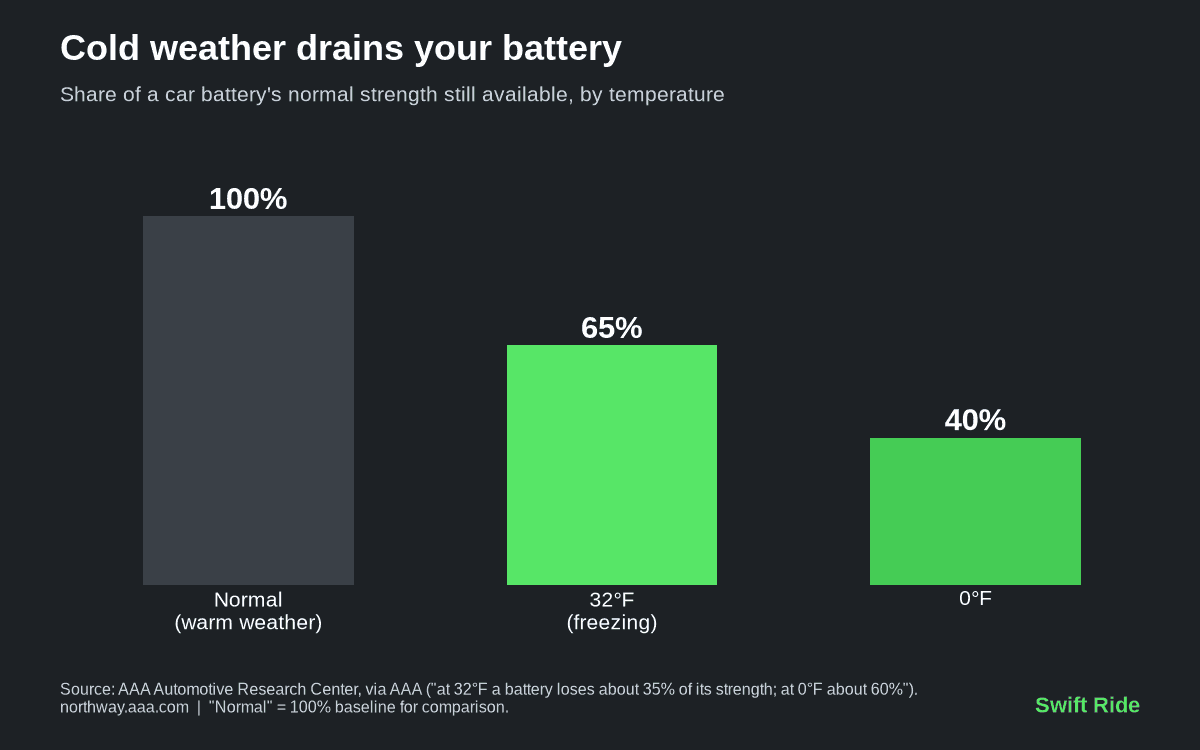
Cold weather weakens your battery right when your engine needs more power to start. AAA says that at 32°F a battery loses about 35% of its strength, and at 0°F it loses about 60%, while starting can take up to twice the normal current.
What are the warning signs of a weak battery?
AAA lists dim or yellowish headlights, a weak horn, accessories that stop working, a sulfur smell and a swollen or corroded battery case as warning signs. If you notice any of these, or your battery is 3 or more years old, get it tested before the first cold snap.
What can I do myself?
- Look at the date sticker on your battery to see how old it is.
- Check the terminals for white or green corrosion.
- Ask an auto parts store or repair shop for a battery and charging system test.
- Keep jumper cables (or a portable jump starter) in the car.
How do I check my tires for winter driving?
Check tire pressure and tread before winter, then keep checking pressure at least once a month. NHTSA says tire pressure drops as the temperature drops, and a GM service bulletin posted on NHTSA's site says that, generally, every 10°F change equals about 1 psi.
- Use the right number: inflate to the pressure on the placard inside your driver's door, not the maximum number on the tire sidewall (NHTSA).
- Check when cold: NHTSA recommends checking when tires are cold, meaning the car has been parked for at least 3 hours.
- Check tread: NHTSA says tread should be at least 2/32 of an inch. For a quick check, put a penny in the tread with Lincoln's head upside down. If you can see the top of Lincoln's head, it is time for new tires.
- Check tire age and the spare: NHTSA notes some vehicle makers recommend replacing tires after 6 years, and reminds drivers to check the spare too.
Tires matter even more on wet roads. Worn tread has less grip on rain-slick pavement, and you are driving more miles than most people.
What else should I check: wipers, lights and fluids?
Make sure you can see and be seen. NHTSA recommends checking wiper blades, defrosters, washer fluid and all your lights, and keeping your coolant at the right level.
- Wipers: replace blades that streak, chatter or leave patches.
- Washer fluid: fill up with a winter fluid that includes de-icer.
- Defrosters: test front and rear defrost before you need them on a foggy morning.
- Lights: walk around the car with the lights, brakes and signals on. Riders and other drivers need to see you in the rain.
- Recalls: look up your VIN on NHTSA's recall tool (nhtsa.gov/recalls) and fix any open recalls.
What should I keep in my car this winter?
Keep a small kit that helps you and your riders if you get stuck. NHTSA's winter kit list includes an ice scraper, jumper cables, a flashlight, warning devices like flares, a first aid kit, blankets, a phone and charger, water, snacks and any medicine you need.
- Jumper cables or a portable jump starter
- Flashlight and road flares or reflective triangles
- Phone charger or power bank
- Blanket, water and a snack
- First aid kit
- Ice scraper (useful on the few icy mornings in Atlanta and Dallas)
- Driver extra: a few towels and all-weather floor mats help keep the car clean for the next rider on wet days.
NHTSA also suggests keeping your gas tank close to full in winter, so you are not stuck if traffic stops.
How should I drive in rain and ice as a gig driver?
Slow down, leave more space and know when to log off. Your rating and your car are worth more than one rushed trip.
- Plan for slower trips. FHWA says arterial speeds drop 10 to 25% on wet pavement and 30 to 40% on snowy or slushy pavement.
- Leave extra following distance and brake early.
- Check the weather and traffic before you start a shift, especially during NOAA or local alerts.
- If roads ice over, it is fine to go offline. Bridges and overpasses freeze first.
- Turn on your headlights in the rain so riders and other drivers can see you.
For more seasonal driving tips, see our night driving tips for rideshare drivers.
What are your options for winter car prep?
You have three honest options, depending on your time, budget and how much you drive.
Option 1: Do the basic checks yourself
A tire gauge, a penny and 20 minutes in a parking lot cover a lot. You can check tire pressure and tread, top off washer fluid, swap wiper blades and walk around to test lights. This is the cheapest option, but it does not catch everything.
Option 2: Get a winter inspection at a shop
A shop can test your battery and charging system, check belts, hoses, brakes and coolant, and spot problems before they leave you stranded. It costs money and time off the road, and repairs can add up fast if they find something.
Option 3: Plan for downtime
Even with good prep, cars break down. It helps to know what a lost day costs you. Estimate: take what you usually net in a day, then add the repair bill and any towing. That is the real price of a breakdown. Many drivers keep an emergency fund for this. (If you track car costs for taxes, our rideshare driver taxes guide explains what to keep.)
Or go with Swift Ride and skip the winter car worries
If you would rather spend winter driving instead of fixing, Swift Ride is the easier path. Swift Ride rents cars to rideshare and delivery drivers, and our cars qualify for UberX and delivery platforms in all of our cities, including Atlanta, Houston and Dallas.
Per our Services page, Swift Ride rentals are fully managed:
- Full maintenance included, and no out-of-pocket repairs or downtime
- Every car is inspected and serviced regularly
- Free tire replacements
- 24/7 roadside assistance
- Commercial insurance coverage
- No long-term contracts
That means the battery tests, tire checks and repair bills in this checklist are handled for you. You still drive smart in the rain, but you don't carry the cost when something wears out. See how it works or browse our cars.
Ready for an easier winter? Apply at swiftride.net in about 2 minutes.
Winter car prep checklist for rideshare drivers
| What to check | How to check it | How often |
|---|---|---|
| Battery | Check age; get a battery and charging test if 3+ years old | Before winter |
| Tire pressure | Door placard number, tires cold (parked 3+ hours) | Monthly and after big temperature drops |
| Tire tread | At least 2/32 inch; penny test | Before winter |
| Tire age and spare | Check date code; check spare pressure | Before winter |
| Wipers and fluid | Replace streaking blades; winter fluid with de-icer | Before winter |
| Lights and defrosters | Walk-around test of all lights; test defrost | Monthly |
| Recalls | Look up your VIN at nhtsa.gov/recalls | Before winter |
| Emergency kit | Jumper cables, flashlight, charger, blanket, water, first aid | Before winter |
FAQ
How do I winterize my car for Uber or DoorDash in the South?
Focus on rain more than snow. Test your battery, check tire pressure and tread, replace worn wipers, use winter washer fluid, check your lights and keep a small emergency kit in the car.
How much does cold weather drain a car battery?
AAA says a battery loses about 35% of its strength at 32°F and about 60% at 0°F. Starting a cold engine can also take up to twice the normal current.
How often should I check tire pressure in winter?
NHTSA recommends checking at least once a month, when the tires are cold. Pressure drops as temperatures drop, about 1 psi for every 10°F according to a GM bulletin posted by NHTSA.
Will it snow in Atlanta, Houston or Dallas this winter?
NOAA's Winter Outlook does not forecast snowfall. It does favor wetter-than-average conditions across the South for December 2026 through February 2027, so plan for more rain and the chance of a few icy days.
Is it safe to drive for Uber in the rain?
Many drivers do, but rain is the most common weather factor in crashes, according to FHWA. Slow down, leave extra space, use your headlights and log off if conditions get dangerous.
Does Swift Ride cover maintenance and tires?
Yes. Swift Ride's Services page lists full maintenance, free tire replacements, 24/7 roadside assistance and commercial insurance coverage. You can apply at swiftride.net in about 2 minutes.
This article is general safety information. Always follow your vehicle maker's manual and local weather alerts.
Sources
- NOAA, "El Niño looms large over U.S. winter outlook" (Oct 15, 2026): https://www.noaa.gov/news-release/el-nino-looms-large-over-us-winter-outlook
- NOAA Climate Prediction Center, Prognostic Discussion for Long-Lead Seasonal Outlooks (Oct 15, 2026): https://www.cpc.ncep.noaa.gov/products/predictions/monthly_climate/fxus05.html
- FHWA Road Weather Management Program, "How Do Weather Events Affect Roads?": https://ops.fhwa.dot.gov/weather/roadimpact.htm
- AAA, "Temperatures are dropping and so is your car battery's power": https://www.northway.aaa.com/magazine/news/temperatures-are-dropping-and-so-your-car-battery%E2%80%99s-power
- NHTSA, "Winter Driving Tips": https://www.nhtsa.gov/winter-driving-tips
- GM service bulletin on tire pressure and temperature, posted by NHTSA: https://static.nhtsa.gov/odi/tsbs/2023/MC-10231518-0001.pdf
- NHTSA tire safety brochure (penny test): https://www.nhtsa.gov/sites/nhtsa.gov/files/one.pdf
- Houston Public Media, Houston snowfall totals (Jan 21, 2025): https://www.houstonpublicmedia.org/articles/news/weather/2025/01/21/511534/houston-snowfall-totals-records-six-inches/
- Swift Ride Services page: https://swiftride.net/services
- #winter driving
- #car maintenance
- #rideshare tips
- #gig drivers
- #atlanta
- #houston
- #dallas