
Uber Driver Take-Home Pay: Why Fees and Gas Are Eating More of Each Trip
Uber fares rose in Q3 2026, but platform fees rose faster and gas took a larger share of every dollar. Here's what Gridwise found, and practical ways to keep more per trip.
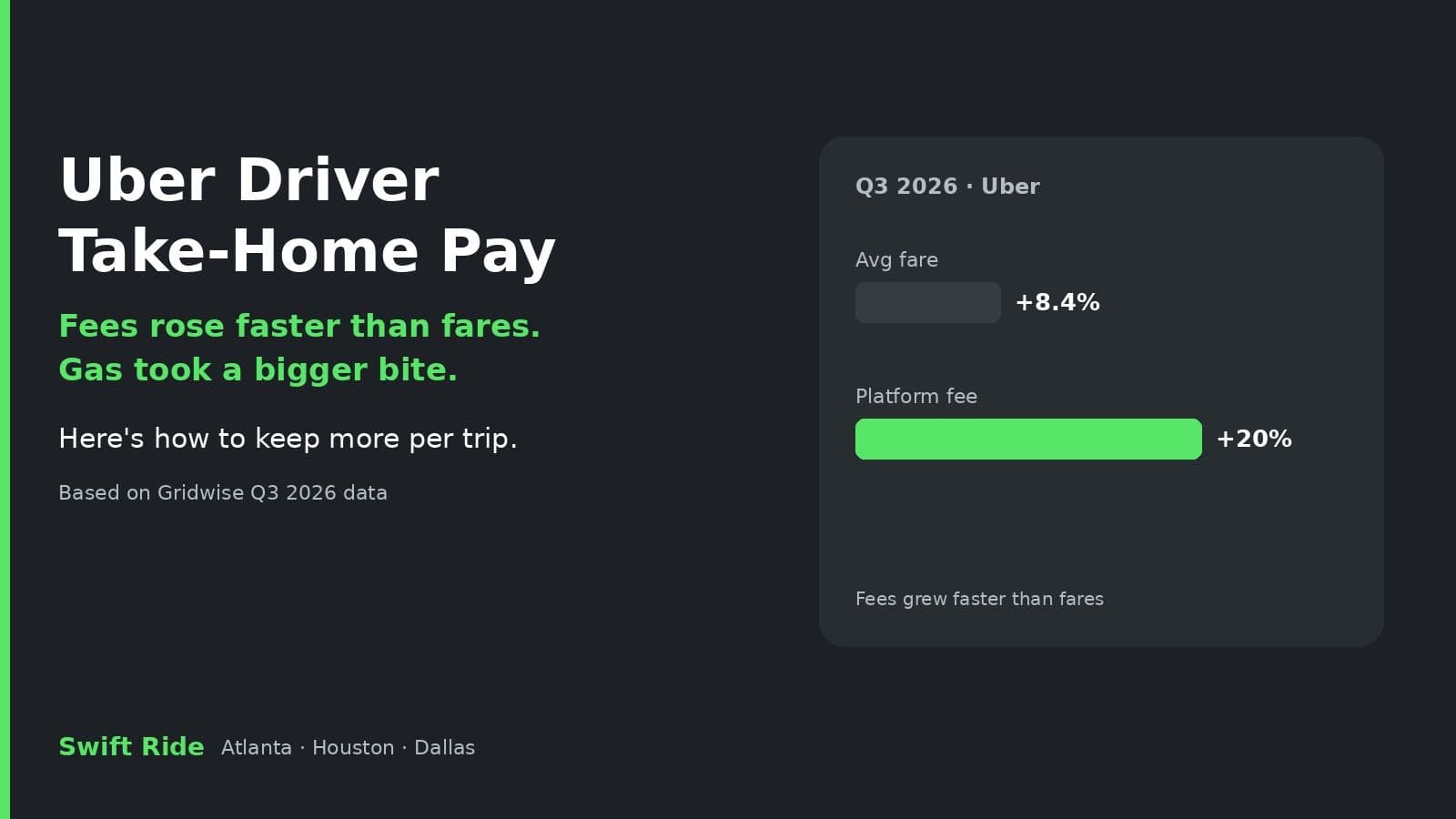
If you drive Uber, you probably felt it before you saw the charts: riders are paying more, but your Uber driver take-home pay does not always feel like it is keeping up. Gridwise's Q3 2026 Rideshare and Delivery Report puts hard numbers on that feeling. Fares went up. Platform fees went up faster. Gross pay per hour rose. Gas took a larger share of every dollar.
This post walks through those findings (Uber-only), then covers practical ways to keep more per trip, including when renting a rideshare-ready car in Atlanta, Houston, or Dallas can be the simpler path.
Sources: Gridwise Q3 2026 report and Ryan Green's LinkedIn summary (Nov 2, 2026).
What happened to Uber fares and platform fees in Q3 2026?
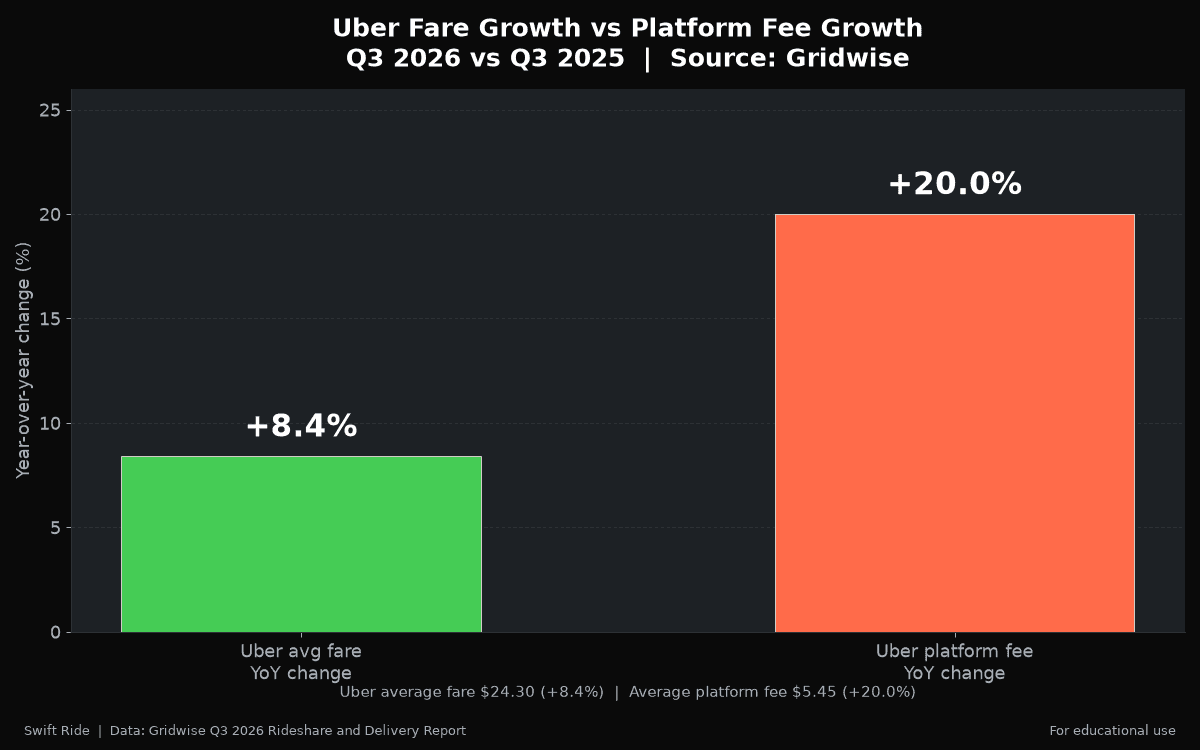
Short answer: Uber's average fare rose 8.4%, but its average platform fee rose 20.0%. The platform kept a bigger share of each trip.
According to Gridwise (Q3 2026 vs Q3 2025):
- Uber average fare: $24.30, up 8.4%
- Uber average platform fee: $5.45, up 20.0% from $4.54
- Uber median platform fee rate: 22.4% (Gridwise also reports 22.44%), a new high, up from 19.2% a year earlier
In plain English: riders paid more, and Uber's cut grew faster than the fare. That is the core Uber platform fees story behind today's take-home math.
Did Uber driver gross pay actually go up?
Short answer: Yes on a gross basis. Gross pay per trip, per hour, and for the quarter all rose. Drivers did not complete more trips per hour.
Gridwise reports for rideshare drivers in Q3 2026:
- Gross pay per trip: $15.69, up 8.1%
- Hourly gross pay: $24.09, up 8.3%
- Quarterly gross pay: $3,941, up 10.7%
- Trips per working hour: 1.67 (unchanged year over year, tied for the lowest in Gridwise data back to 2019)
- Drivers worked 2.1% more hours
So the pay bump came from higher pay per trip and a bit more hours worked, not from busier hours. When trips per hour stay low, every fee increase and every gas spike hits harder.
How much of rideshare earnings after gas is left?
Short answer: Less than a year ago. Fuel costs claimed a bigger share of gross hourly pay.
From Gridwise / Ryan Green's Q3 2026 write-up:
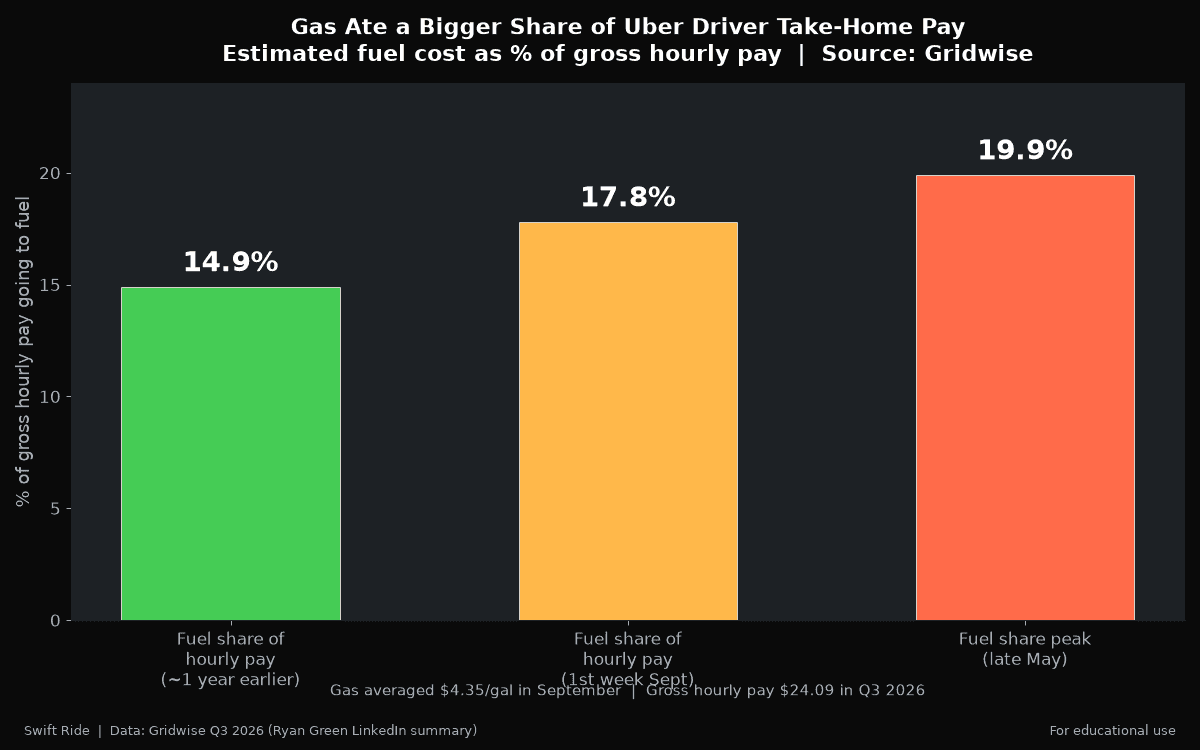
- Gas averaged $4.35/gal in September
- Estimated fuel costs = 17.8% of gross hourly pay in the first week of September (up from 14.9% a year earlier)
- Late May peaked at 19.9%
Gross hourly pay can rise and still leave you with weaker rideshare earnings after gas. That is why Uber driver expenses deserve as much attention as the gross number on the app.
How can Uber drivers keep more per trip?
Short answer: Treat take-home as gross minus fees, fuel, and car costs. Track expenses, pick profitable hours, cut dead miles, protect MPG, and be honest about owning vs renting.
Here are DIY moves that map directly to the Gridwise picture:
1. Track real Uber driver expenses, not just weekly deposits
Log fuel, washes, phone plan share, parking, and maintenance. Compare weekly deposits to true net. If you only watch gross, platform fees and gas will quietly shrink your Uber driver take-home pay.
2. Choose hours where trips still pay after fuel
With 1.67 trips per working hour (unchanged), idle time is expensive. Favor windows where wait times are shorter and trip length justifies the drive to the zone.
3. Protect MPG on purpose
Tire pressure, smooth acceleration, and fewer cold short hops matter more when gas is $4.35/gal and fuel is ~18% of hourly gross. Small MPG gains stack across a full week.
4. Cut dead miles
Empty miles are unpaid fuel. Cluster trips, avoid long repositioning unless the next surge or airport run is clearly worth it, and set a personal "max empty miles" rule.
5. Price your car the way a business would
Ownership costs (payment, commercial insurance, repairs, tires, downtime) often hide behind "I already have a car." Compare those to an all-inclusive rideshare car rental in Atlanta, Houston, or Dallas if maintenance risk or downtime is eating your week.
Or go with Swift Ride
If the DIY list feels like a second job, there is a simpler path.
Swift Ride rents rideshare-ready cars to Uber and delivery drivers in Atlanta, Houston, and Dallas. Cars qualify for UberX and delivery platforms. The Fully Managed setup includes full maintenance, no out-of-pocket repairs, free tires, 24/7 roadside, commercial insurance, and no long-term contracts. Apply at swiftride.net in about two minutes.
Website pricing currently shows $399/wk all-inclusive (confirm on site before you decide). Many drivers use that structure so a surprise repair or tire bill does not wipe out a good week of Uber driver take-home pay.
Learn how it works: How Swift Ride works.
FAQ: Uber driver take-home pay
What is Uber driver take-home pay?
It is what you keep after Uber platform fees, fuel, and car costs, not the gross fare the rider paid or the gross amount shown before expenses.
Why did Uber platform fees matter so much in Q3 2026?
Because the average fee rose 20.0% while the average fare rose 8.4%, and the median fee rate hit about 22.4%. Fees grew faster than fares.
Is gross hourly pay the same as take-home?
No. Gridwise shows hourly gross at $24.09, but fuel alone was estimated at 17.8% of gross hourly pay in early September. Take-home is lower once you subtract expenses.
How do I keep more per trip without working endless hours?
Raise net per trip: better hours, fewer dead miles, better MPG, tighter expense tracking, and a car setup that does not surprise you with repair downtime.
Does Swift Ride help with Uber driver expenses?
Swift Ride's Fully Managed rental is built to bundle maintenance, tires, roadside, and commercial insurance so those line items are predictable while you drive Uber or delivery in Atlanta, Houston, or Dallas.
Want fewer car surprises while you protect Uber driver take-home pay? See available cars and apply at swiftride.net.
Citations
- Gridwise, "Q3 2026 Rideshare and Delivery Report," https://gridwise.io/q3-report
- Ryan Green, "New Report: Uber and Lyft Fares, Fees, and Driver Pay in Q3 2026," LinkedIn, Nov 2, 2026, https://www.linkedin.com/pulse/new-report-uber-lyft-fares-fees-driver-pay-q3-2026-ryan-green-dxyxe
- #uber
- #driver-pay
- #rideshare